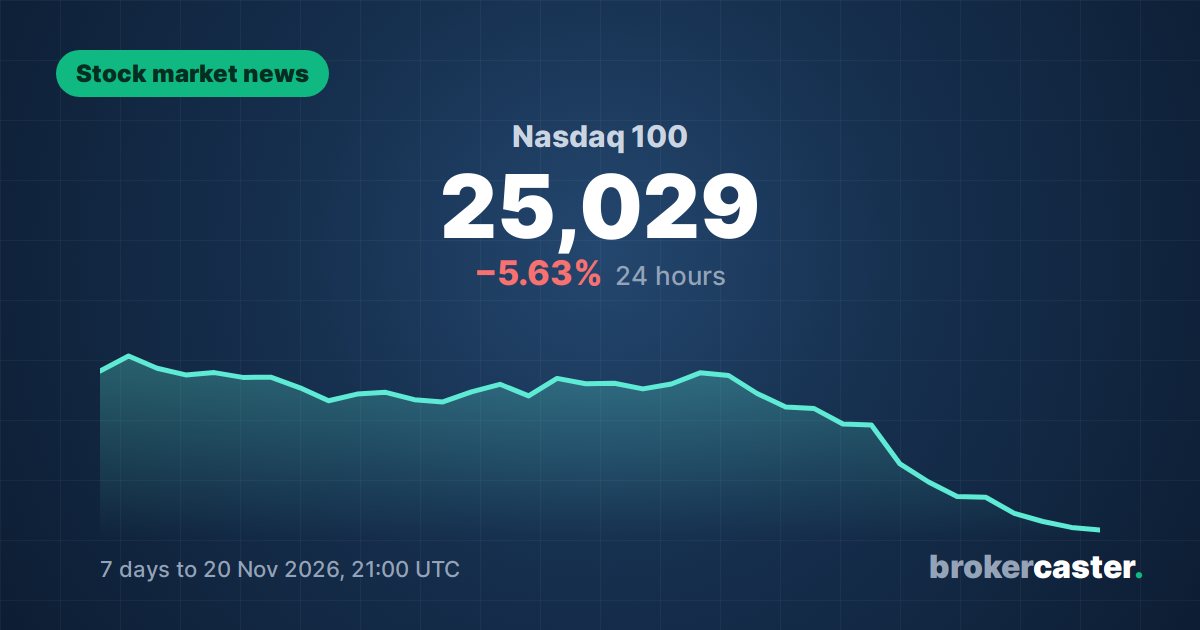
- The Nasdaq 100 fell 5.61% on Friday to 25,028.98 and lost 10.43% on the week, its worst week since March 2020.
- Nvidia dropped 14.01% to $125.53 after Reuters reported an SEC probe of its accounting; no finding has been announced.
- The S&P 500 lost 3.70% to 6,910.39, its seventh straight decline.
US technology stocks suffered their heaviest weekly losses in more than six years. According to investingLive, the Nasdaq 100 fell 5.61% on Friday to 25,028.98 and lost 10.43% over the week, its worst week since March 2020. The Nasdaq Composite dropped 5.28% to 22,617.73, wiping out its gains for the year.
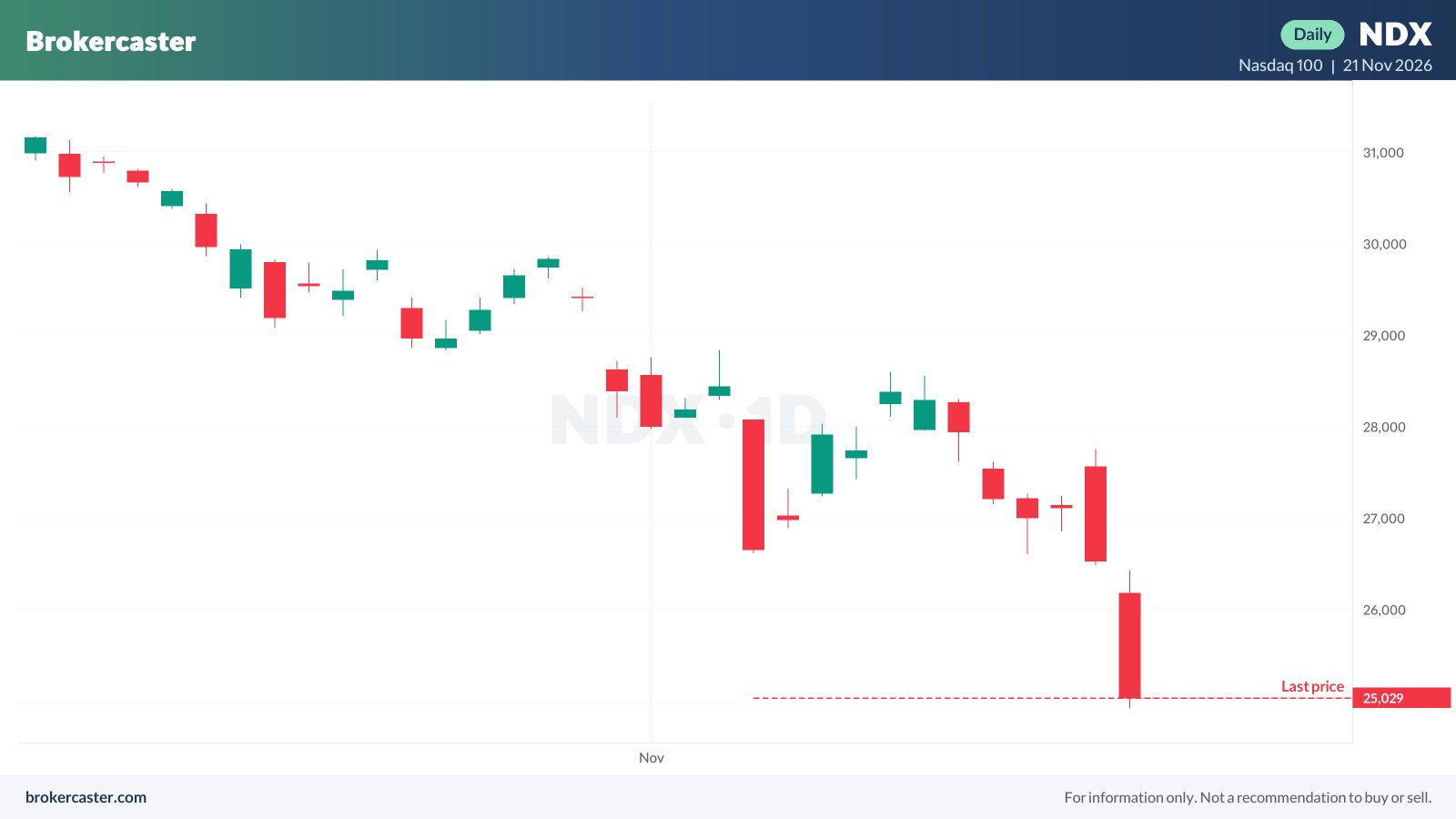
The selling was broad. The S&P 500 lost 3.70% to 6,910.39, its seventh straight decline and a weekly drop of 8.61%, while the Dow Jones Industrial Average fell 950.10 points, or 1.93%, to 48,151.82. investingLive said the Dow also had its worst week since March 2020, with a weekly loss of 8.03%. The Russell 2000 slid 2.76%.
Nvidia and the AI trade
Nvidia fell 14.01% to $125.53 after Reuters reported that the US Securities and Exchange Commission was probing the company's accounting. The report is about an inquiry; no finding has been announced. The losses spread across the AI supply chain, from chip designers such as Arm, AMD and Broadcom to memory makers Micron and SanDisk and cloud operators CoreWeave and Nebius. investingLive counted twenty-two names on its AI and chip watchlist down more than 10%, including the VanEck Semiconductor ETF, which dropped 10.60%.
Market breadth was weak: nearly five Nasdaq stocks fell for every one that rose, and S&P 500 decliners outnumbered advancers 357 to 125, the outlet said.
Bonds rallied as investors sought safety. The 10-year Treasury yield fell 12 basis points to 4.93%, yet tech shares stayed under pressure. investingLive noted that both Nasdaq indices closed less than 0.5% above their 100-week moving averages, a level many chart watchers follow.
The slide comes as markets price a near-certain Federal Reserve rate increase in December, with the Fed's target range at 3.75–4%, according to our interest rate tracker.
What it means for traders
- Index CFDs on the Nasdaq 100, S&P 500 and Dow are the most directly affected; see our Nasdaq analysis page for the current view.
- Next on the economic calendar: US core PCE inflation on Wednesday, November 25, a key input for December Fed pricing.
- After daily swings above 5%, check your broker's index CFD margin requirements, overnight financing and trading hours, which may change around the US Thanksgiving holiday.
Source: investingLive