- Russian exchanges can start trading Bitcoin from November 22 once the central bank approves their trading rules, according to CryptoSlate.
- Moscow Exchange is aiming for a December 1 pilot, with five trading pairs listed by its clearinghouse.
- Ordinary investors are limited to 300,000 rubles of purchases per intermediary each calendar year, and only Bitcoin, Ethereum and USDT.
Russia has opened a legal path for its exchanges to trade Bitcoin and other approved crypto assets. According to CryptoSlate, an ordinance on exchange operations allows venues to begin trading from November 22, provided the Bank of Russia has signed off on their trading rules. Moscow Exchange plans to launch on December 1, starting with pilot transactions as member firms connect. Crypto still cannot be used to pay for goods and services inside Russia.
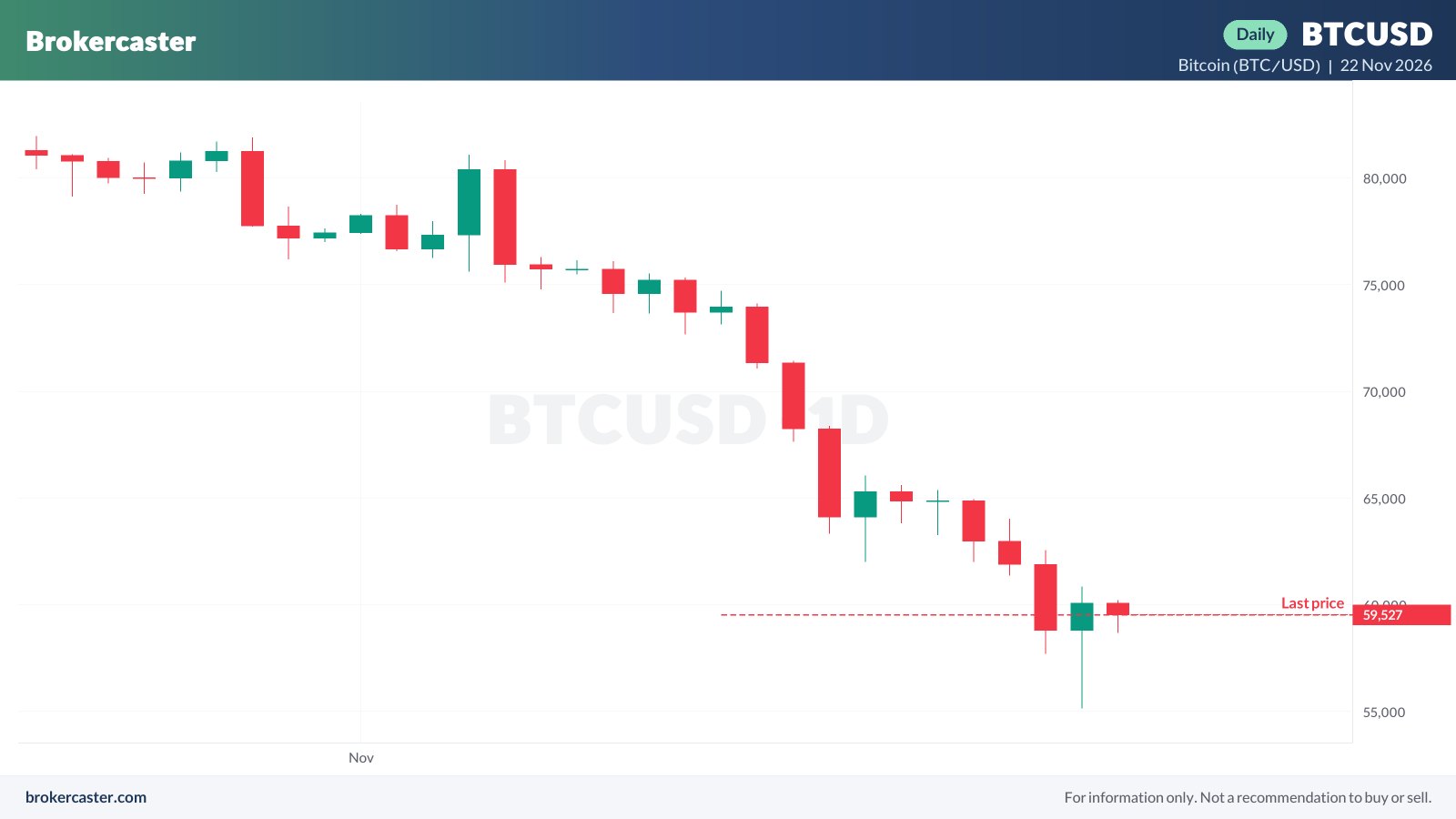
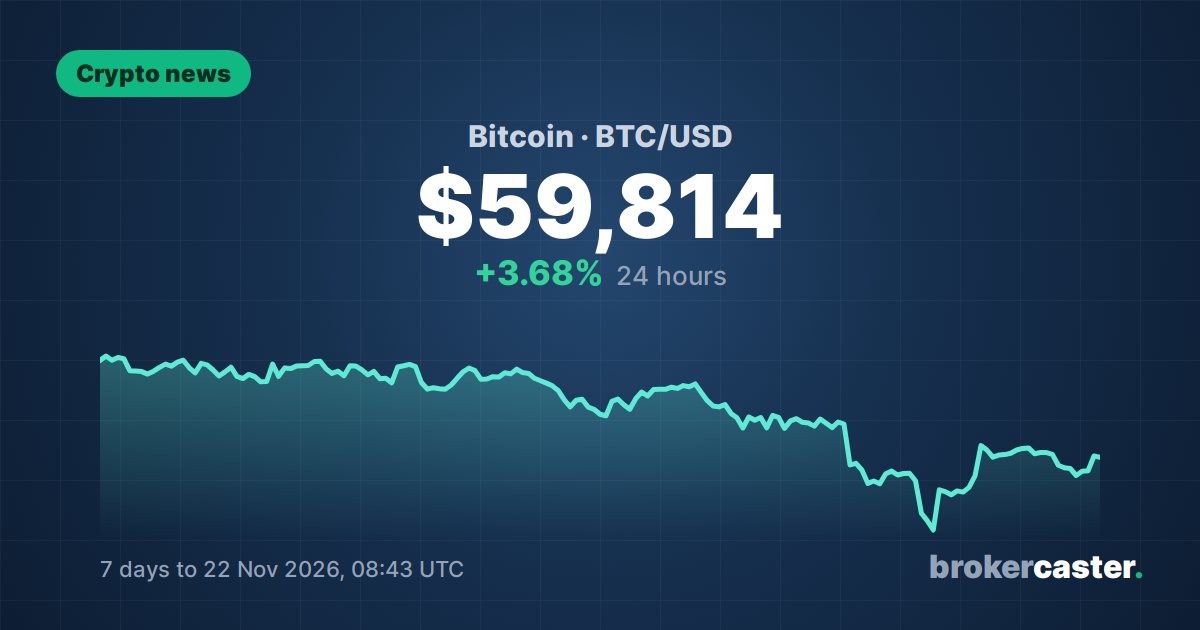
The launch comes during a weak stretch for the market: by our price data, Bitcoin is down about 26.8% over the past 30 days, trading near $59,500 after a 30-day high of about $81,956 and a low of about $55,150.
Who can buy and how much
The central bank's rules for retail purchases took effect on November 17, the report said. Ordinary investors can buy only Bitcoin, Ethereum and the dollar-linked stablecoin USDT, and they face a cap of 300,000 rubles in purchases through a single intermediary in a calendar year. The limit counts the rubles spent, not the later market value of the holdings. Qualified investors can buy other coins without that cap, but both groups must pass a test and review the risks first.
CryptoSlate said the central bank picked the three assets partly because they trade heavily and have at least five years of price history on foreign venues. Exchanges must register trading firms, track orders and trades, calculate market prices and report to the regulator. Exporters and importers may use crypto for cross-border settlement under a separate provision, while domestic merchants remain barred from accepting it.
How the Moscow Exchange market will work
According to the National Clearing Centre's published plan, as reported by CryptoSlate, the market will list five pairs: Bitcoin, Ethereum and USDT against the ruble, plus Bitcoin and USDT against USDX, a settlement currency used by the clearinghouse. Direct BTC/USDT trading is not planned at launch, although crypto-to-crypto pairs may be considered in 2027. Short selling will initially be banned, though brokers may offer margin trading under the applicable rules, and settlements are expected roughly every 30 to 60 minutes.
Trades will settle through accounts at a separate digital depository, without a blockchain transaction for every match. The published materials do not yet identify that depository or say whether customers can withdraw coins to personal wallets, the report noted.
Moscow Exchange already runs cash-settled crypto futures. By mid-September it reported more than 600 billion rubles in crypto-futures turnover since the first contracts began trading in summer 2025, CryptoSlate said.
The sanctions question
The US Treasury sanctioned both Moscow Exchange and the National Clearing Centre in June 2024. CryptoSlate noted that the planned USDT market uses a token issued on Ethereum by a company outside Russia, and that Tether has a policy of freezing wallets linked to sanctioned parties. The report said no freeze connected to the pilot has been verified, and the exchange has not said which wallets will hold the tokens.
What it means for traders
- The pilot is limited to Russian intermediaries and capped retail purchases, so any direct effect on global Bitcoin and Ethereum prices is likely to be small at first; see our Bitcoin price analysis for the wider picture.
- December 1 is the date to watch for the first trades and for how much repeat volume the new market attracts.
- If you trade crypto CFDs, check your broker's weekend hours, overnight financing and margin on BTC/USD and ETH/USD, which often differ from forex pairs.
Source: CryptoSlate